Back to RTG Spectrum

RF Sensor Integration

Integrate RF sensors into a common analysis and operator workflow.

RTG Spectrum helps hardware teams, integrators, and prototype groups connect sensors, SDRs, scanners, and proprietary data sources into normalized event pipelines and operator-facing review tools.

Integration Path

Customer hardware becomes source-aware events, timelines, and reports.

Many sensors can detect something useful, but still need collector software, data normalization, dashboards, historical context, exports, and operator workflows. RTG Spectrum provides the missing software layer so RF observations can become usable operational information.

Common Needs

  • Customer hardware, proprietary sensor, SDR, scanner, or gateway integration
  • Collector adapters, MQTT/event streams, schemas, and source-aware normalization
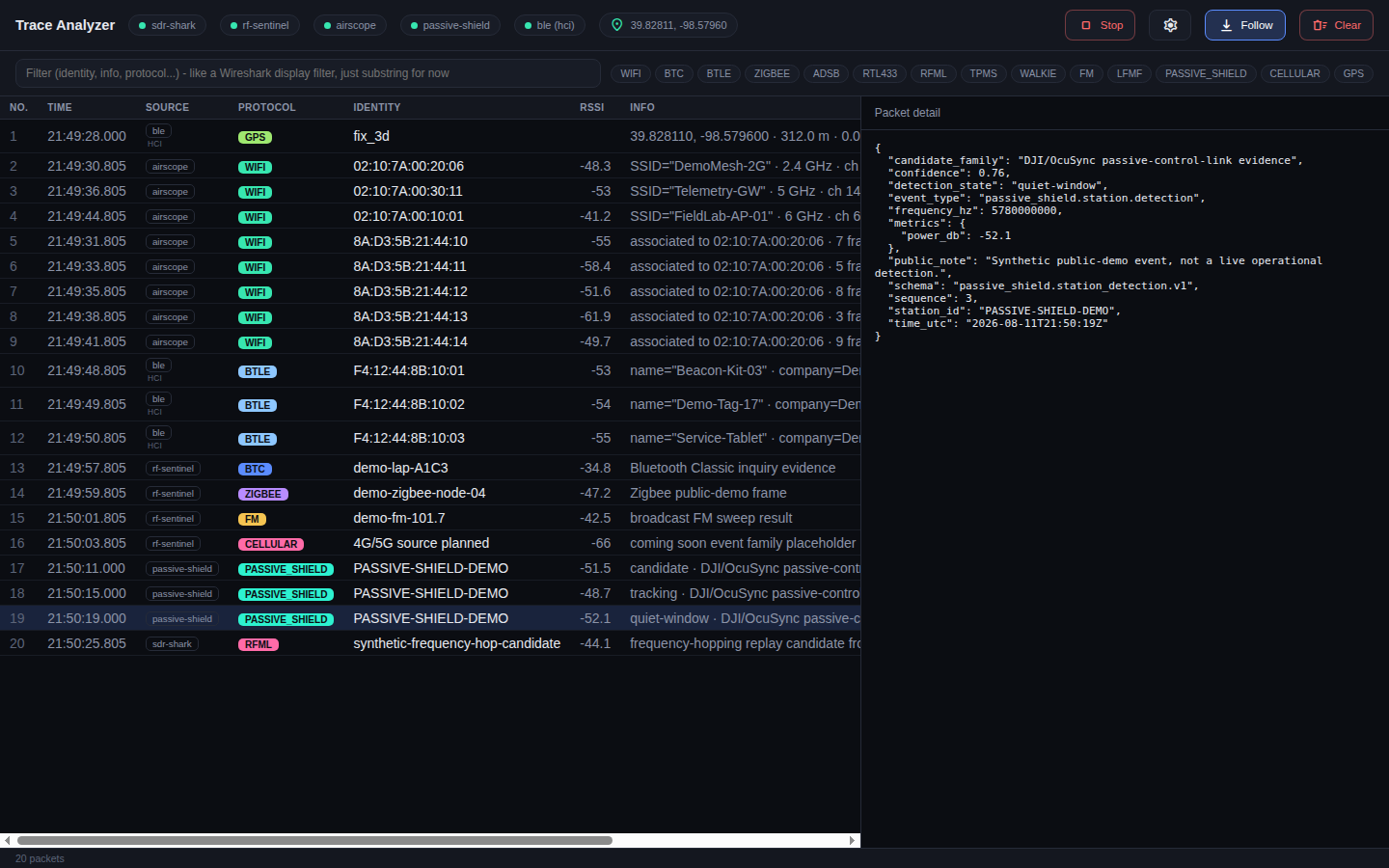
  • Trace Analyzer timelines, Pattern-of-Life analytics, dashboards, and report exports
  • Docker or Linux deployment, configuration, health/status views, and replay fixtures
Reference Architecture

The integration model is already visible in public artifacts.

Customer sensor or RTG collector

Hardware / Data Source

SDR, RF sensor, WiFi/BLE scanner, proprietary node, gateway, or customer event feed.

Collector Adapter

Protocol parser, API bridge, MQTT publisher, replay fixture, configuration, and health/status reporting.

Normalized events preserve source, timestamp, protocol, identity, signal, and raw detail

Trace Analyzer + Module Views

Unified review, Pattern-of-Life analysis, topology, dashboards, exports, and operator decision support.

Proof Links

Start from working infrastructure instead of an empty repository.

Trace Analyzer common event timeline

Platform Overview

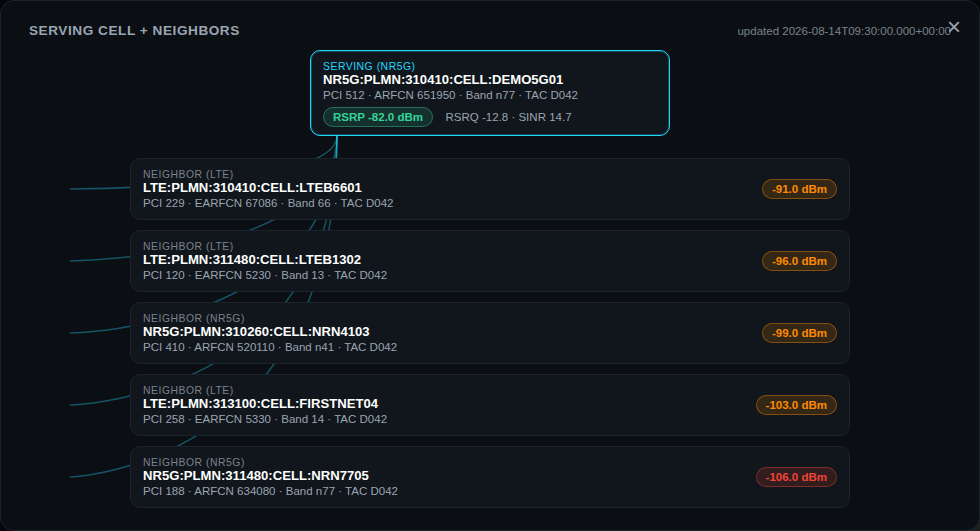
The shared event-plane architecture for source-aware RF and wireless evidence.

Open Overview
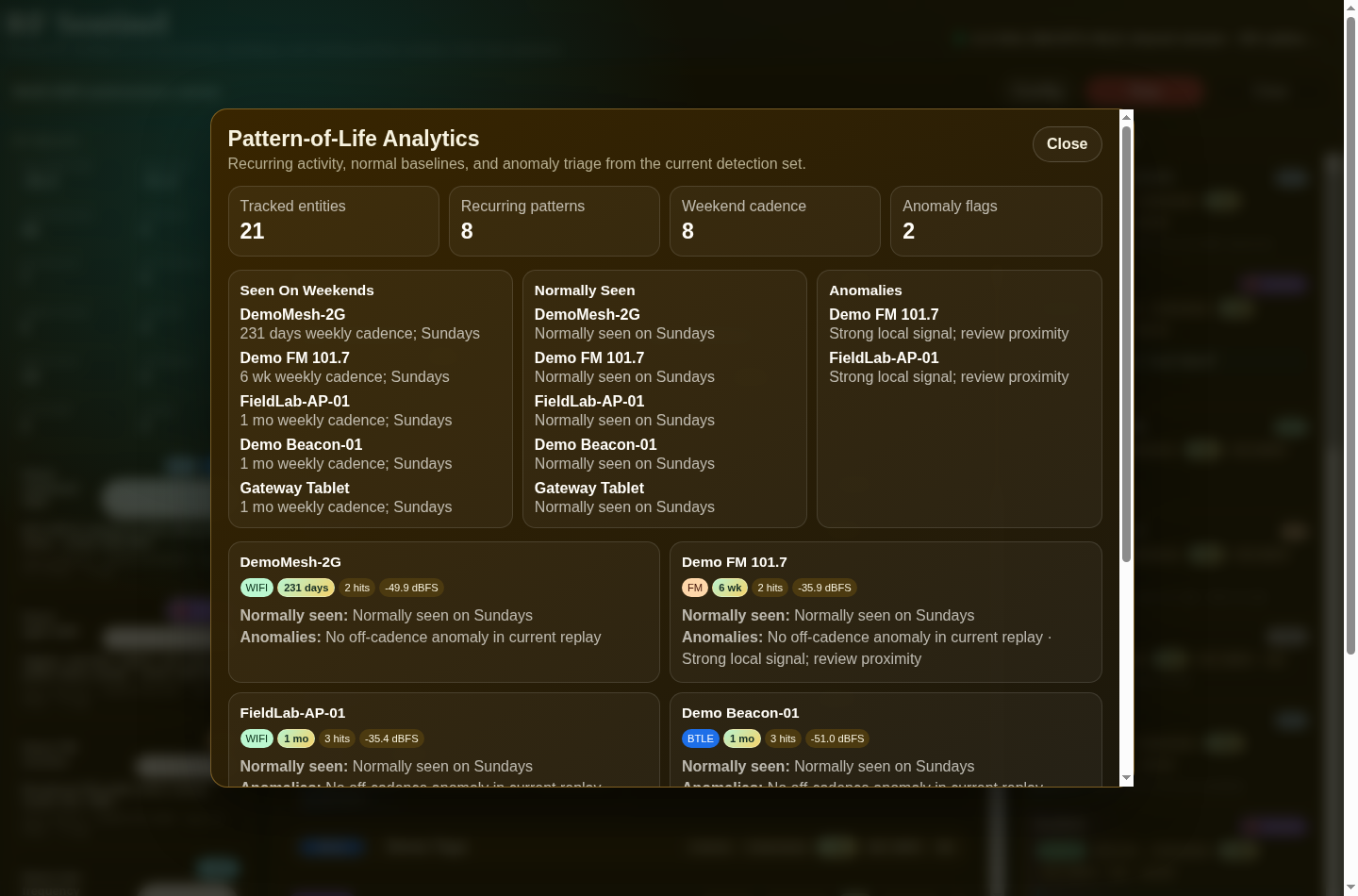
RF Sentinel analytics modal

RF Sentinel + Trace Analyzer

Multi-protocol events feeding analytics and a shared timeline.

Read Case Study
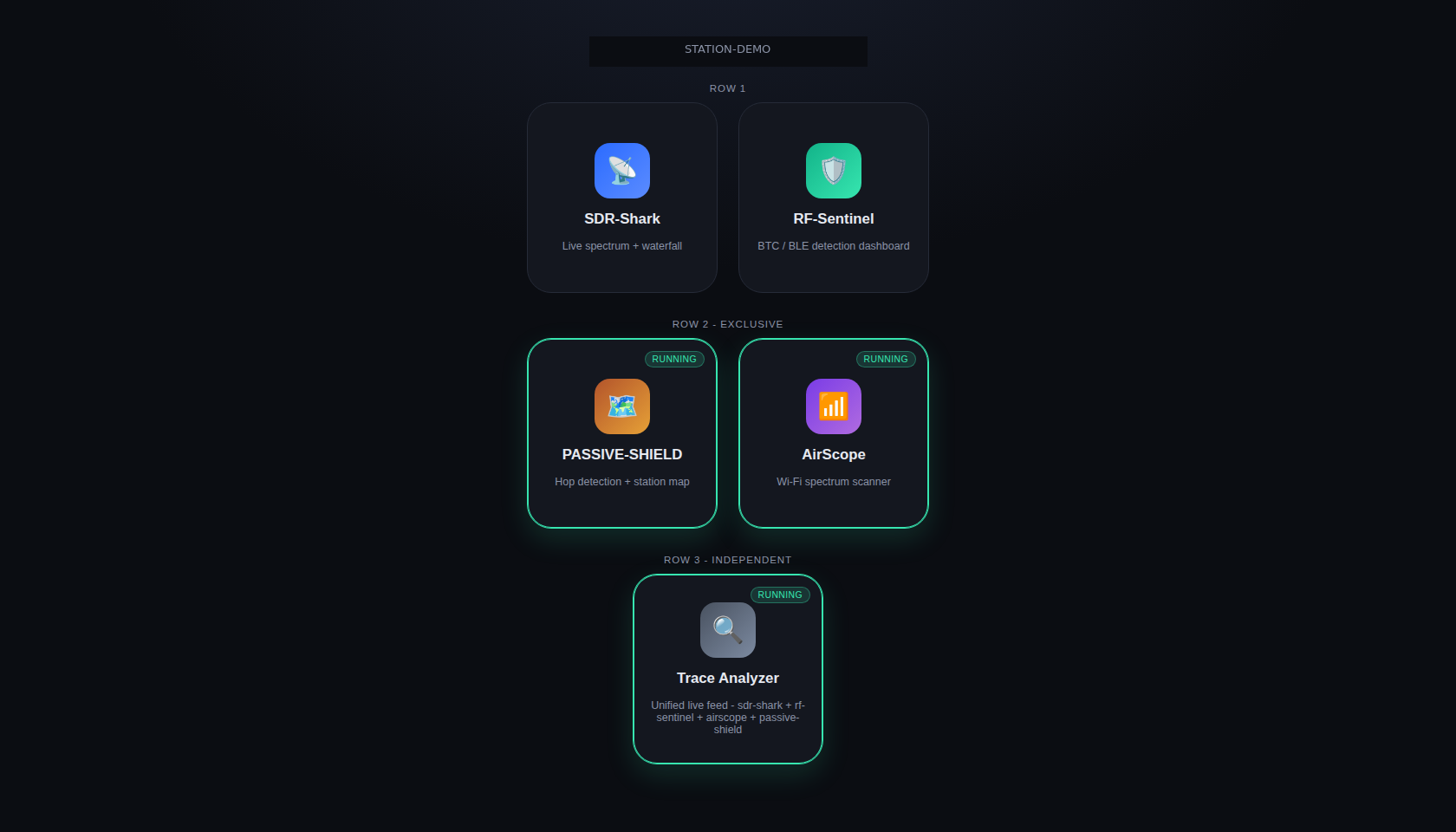
RTG Spectrum launcher

Integration Demo

Representative public sequence from collectors to operator context.

Open Demo